
|
Mary Magdalene (Worman) Creveling |
Mary Magdalene (Worman) Creveling was born on Feb. 19, 1825 in her parents' stone house on the John Krum farm, some four miles east of Danville, Montour County, PA. She was the daughter of Samuel and Regina (Kreider) Worman.
She wed Alfred I. Creveling (1832-1890), originally from Espy, Columbia County.
There were seven children of this union, of whom three are known -- Ella R. Gearhart, Grace E. Creveling and Edith I. Creveling. Sadness shrouded the family at the death of daughter Edith in infancy in her first year of life in 1862. The family were members of the First Presbyterian Church of Bloomsburg. In August 1882, their membership was transferred to the Grove Church of Danville, PA.
When the federal census enumeration was made in 1860, the Crevelings dwelled in Scott Township, Columbia County, with Alfred earning a living as a merchant. Mary is believed to have been a judge of home and dairy products including jellies, spiced peaches and apple butter at the Agricultural, Horticultural and Mechanical Exhibition of Columbia County, held Oct. 18-20, 1860. At the 1864 exhibition, in Bloomsburg, she judged exhibits of "Fancy Articles."
During the Civil War, Alfred joined a company of "emergency men" who departed Bloomsburg on Sept. 22, 1862. They were mustered into the army in late October and served until July 27, 1863 as members of the 13th Pennsylvania Infantry, Company A. During that period of months, "The regiment moved to Washington December 6, and reached Yorktown on the 29th," said the Bloomsburg Columbian. "In April it had a skirmish near Williamsburg, and was on the advance picket line until the 23rd of June. When the rebels moved into Pennsylvania, a demonstration towards Richmond was made by our troops, and the 178th under Gen. Keys moved towards Bottoms Bridge on the Chickahominy. It had a brisk skirmish on the 2d July. It held the picket line until the 6th, was then returned to Williamsburg and hurried to Washington to reinforce the army of the Potomac. But the defeat at Gettysburg relieved it, and it was sent to Harrisburg and mustered out. He was promoted to sergeant on July 1, 1863.
Alfred had a strong entrepreneurial spirit and went into a number of business ventures over the years, most of which did not end well. During the 1870s, he was named president of the Shenandoah Iron Lumber, Mining and Manufacturing Company. It ran a furnace which made 60 tons of charcoal pig iron a week, and its bloomary operation converted that iron into blooms. A promising opportunity arose when the company agreed to furnish iron for the Shenandoah Valley Railroad Company in Virginia in affiliation with the Pennsylvania Railroad. In May 1878, Alfred and another contractor Satterlee & Co. met with the Shenandoah Railroad board to iron out all details for building and equipping the line. The Charles Town (SV) Spirit of Jefferson reported that:
...it shall be built from Martinsburg and Shepherdstown, the two branches joining at a point within three miles of Charlestown, running South about 143 miles from Martinsburg, to Waynesboro' or such other point as may be agreed upon on the Chesapeake and Ohio Railroad. The contractors agree to do all engineering, graduation, bridging, complete superstructure and buildings, and to furnish all material and labor to construct and fully equip the road, equal in all respects to a first-class road, and to fully complete it within three years from the date of the contract; to construct necessary turn-tables, water-tanks, car-sheds, engine-houses, machine-shops, stations and signals. In payment for their work they agree to take $75,000 of the bonds of Berkeley county, $200,000 of the bonds of Page county, $180,500 of the bonds of Jefferson county, and $100,000 of the bonds of Clarke county; also first mortgage bonds to the amount of $14,000 per mile of completed road; also $4,500 of the capital stock of the road for each mile of road to be constructed exclusive of that already graded. Bonds to be paid as the work progresses and material is furnished, all material paid for by the counties to remain the property of the same counties until actually used. The equipments for the road, embraced in the contract, include four locomotives, four first-class passenger cars, four second-class passenger cars, three baggage and mail cars combined, twelve box cars, ten cattle cars, thirty flat cars, hand cars, trucks, &c.
A year later, some 20 miles had been completed, from Shepherdstown to the border of Jefferson and Clarke Counties. But it appears to have failed, and in 1877, Alfred was declared bankrupt in the United States District Court for the Western District of Pennsylvania.
He became embroiled in a controversy circa 1878 involving the issuance of mortgage bonds to pay for the completion of the Shenandoah to connect with a line of the Chesapeake and Ohio Railroad. Alfred had entered into a contract with John Satterlee & Company to carry out this work. Disputes over the nature of the bonds and their use as compensation ended up in court and was finally decided upon in March 1890 by the Supreme Court of Appeals of West Virginia. Under the terms of the agreement, Satterlee and Alfred were to:
...complete the railroad, and receive as payment certain stock, and "also first mortgage bonds to the amount of fourteen thousand dollars per mile of completed road out of the total issue of fifteen thousand dollars per mile." It provides, also, that "one thousand dollars per mile of first mortgage bonds shall be retained by the party of the first part for the exclusive purpose of settling for the right of way, and for any claim that may now be due against said railroad company" It also provides that the "party of the first part agrees to issue the first mortgage bonds to the fixed limitof fifteen thousand dollars per mile for each mile of road built under the terms of this contract.
By 1877, he began operating Glendower Iron Works in Danville and in June 1879 acquired a mill from National Iron Company. It sat on the south side of the canal at Danville. Alfred became Glendower's president, with Henry Levis as treasurer and George W. Miles as general manager. Constructed in 1847, the works manufactured railroad iron and other types of bar iron such as merchant and muck bar. It had 14 single puddling furnaces, eight heating furnaces and four trains of rolls, with an annual capacity of 20,000 net tons. The new capacity undoubtedly was intended to strengthen Alfred's ability to fulfill the Shenandoah Railroad contract.
In a short profile in the 1881 book Danville, Montour County, Pennsylvania: A Collection of Historical and Biographical Profiles, author D.H.B. Brower writes: "Alfred Creveling is one of our most enterprising citizens. Building iron works and operating them even in the season of depression, he persevered and now is at the head of the Glendower Iron Works. He came from Columbia county and this place is much indebted to him for his capital and his energy in building up the town, up towards its business capabilities."
But problems arose circa 1880 when the Pennsylvania Railroad, which controlled the Shenandoah line, refused to receive and pay for Glendower's iron rails and splice bars. Alfred sued for relief, claiming $10,000 in damages. He stated in his complaint that in the spring of 1879 had signed a contract to furnish the Pennsy with 600 tons of rail at $39 per ton, a deal amounting to $23,400. Reported the Baltimore Sun, "After 200 tons of rails had been manufactured and were offered for delivery the railroad company refused to receive them. Mr. Creveling alleges that in consequence of this refusal his mill was kept idle for a long time on a rising market. There was also an agreement, he claims, to deliver to him $1,000 worth of bonds of the company, at 85 cents on the dollar, in part payment. These bonds were not delivered and subsequently rose to par, and he claims the difference of 15 cents on the dollar." He and the firm were represented in the case by attorneys Cowen and Cross. The case was heard before a jury in the United States Circuit Court.
Alfred is known in July 1877 to have appointed the New York City firm of Wood & Leman, iron brokers, as Glendower's agent in New York and the East Coast. During the brief time of that contract, Wood & Leman introduced him to William S. Williams, a director and agent of the Covington, Columbus and Black Hills Railroad Company. This led to agreement for the works to furnish 4,500 tons of railroad iron to be delivered to Chicago, at a rate of 300 tons per week, payable within three days of each delivery. Although there were some differences in Alfred's and Williams' versions of the contract, work commenced, and 646 tons were delivered. Within another 300 tons en route, the railroad company became financially strapped and could not continue to pay. Litigation ensued, with Wood & Leman suing to receive its sales commission. At issue was the meaning of the phrase "all sales of railroad iron" in the agreement. The Court of Common Pleas of Montour County ruled in favor of the plaintiffs in the amount of $1,422.54. The Glendale works defaulted on its mortgage payments in 1885 and were sold to H.S. Pierce for $29,000. Pierce sold it a year later to I.N. Greer who then incorporated it as the Mahoning Rolling Mill Company. During the 1880s, the plant began to produce structural tubing and, after yet another sale, it became owned by Thomas J. Price, Dan M. Curry and William G. Pursel under the name Danville Structural Tubing Company.
The 1880 U.S. Census lists him as an iron manufacturer, with the family living at 234 South Fourth Street, Philadelphia. That year, Hannah's 50-year-old, unmarried sister Hannah was in the household.
Alfred on March 29, 1880 formed a partnership with George W. Miles and Henry Levis to establish the company Creveling, Miles & Co., Ltd. Each partner was to contribute sums of $25,000 and $8,000 in capital to purchase the Chulasky Furnace from Isaac Waterman. Their land and furnace were situated on a tract of 154 acres and 142 perches in size. Court records show that there was an "intimate" relationship between Creveling Miles and Glendower Iron as the partners were the same, and as Glendower had sold coal to the new partnership. The furnace initially was profitable, and twice in 1881 the partners received a draw payment aggregating $21,250. A series of labor strikes at Glendower led to the decision to close the works in May 1884 as reported in the Pittsburgh Post. By early 1885, Creveling Miles was fighting for its life. The partners signed a $5,000 promissory note for a loan from the First National Bank of Danville on Feb. 25, 1885. Small amounts were repaid, but as of July 17, 1885, Creveling Miles became insolvent. As of about 1888 there was still a balance due to the bank of $3,820.
|
Alfred's lawyer John G. Johnson Courtesy Wikipedia |
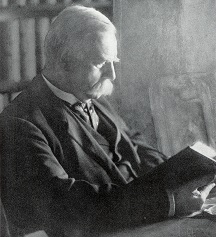
In a defense, the partners' attorney Johnson wrote that "If this court should hold that persons who contribute a property of which they give and record an exact description, can be held liable as general partners in case a jury shall be of the opinion that the valuation was excessive, the limited liability act will be practically repealed... No one would be safe in entering into a joint stock company enterprise... It would be monstrous to hold every member of a limited association liable generally, because of a failure to keep a subscription list book." In an appeal in the Supreme Court of Pennsylvania (32 January Term 1896), the judgment against the partners was upheld, with Chief Justice Sterrett writing the opinion.
Still trying to salvage value from his career experiences, Alfred was hired as manager of the Lochiel Iron and Steel Company in Harrisburg as of 1886. Lochiel initially produced iron rails and later boiler, tank and ship plate steel. The Crevelings made their home in Lochiel Hill at the time, where their daughter Ella married Lochiel president Edward Sayre Gerheart in 1886.
Their final address together was 314 North 33rd Street in Philadelphia. Sadness cascaded over the family when Alfred died in Philadelphia at the age of 58 on Jan. 7, 1890. The cause was "phthisis," a wasting away, possibly pulmonary tuberculosis in older terminology. Burial was in Creveling Cemetery in Almedia near Espy. No newspaper obituary has been found.
The widowed Mary shared a residence in 1900 with her married daughter Emma Ruckle and family back in Espy. In time, the she settled in back in Danville at 9 Bloom Street.
Having been stricken with a cerebral embolism and meningitis, the angel of death spirited her away on Dec. 18, 1909, at the advanced age of 91. She passed in the home of her married daughter Ella Gearhart of Danville, who was the informant for the official Pennsylvania certificate of death. The remains were interred in Espy.
~ Daughter Ella R. (Creveling) Gearhart ~
Daughter Ella R. Creveling (1854-1931) was born in 1854 in Espy, Columbia County.
In her youth she relocated with her parents to Danville, PA. She attended the Danville schools and was an alumna of Bucknell University.
Circa 1885, Ella wed attorney Edward Sayre Gearhart (1856-1941), a native of Roaring Creek, Mayberry Township and the son of Mayberry and Catherine Gearhart.
At the time, he was serving as president of Lochiel Iron and Steel Company, which employed Ella's father as manager. Their wedding was held in her parents' home on Lochiel Hill and was announced in the Harrisburg newspapers. The couple settled in Danville and produced four daughters, Mary Katherine Youngman, Helen Sophia Gearhart, Marian West and Evelyn Regina Bauer. Of Ella, said the Danville News,
While living in Philadelphia she organized and taught the famous Pennsylvania Railroad Bible class, some of whose members now hold high executive positions in the service of the company. There she was known alike by the Superintendent and by 'the man in the cab' and when she left the city was given a testimonial by the railroad men who had come to love her. As a Bible student and teacher she had a wide reputation. For years after her return to Danville she taught the Men's Bible Class in the Grove Presbyterian church. She also took an active interest in civic affairs and was president of the Inter-County Federation of Woman's Clubs and made notable addresses before State Conventions on Welfare work. She was one of the original directors of the Mother's Assistance Fund for Montour county.
Their address was 11 East Front Street. Sadness cascaded over the family at the deaths of daughter Helen (1918) and Mary Katherine (1920).
After a long illness, Ella died on Oct. 25, 1931 at home. The Danville News carried an obituary.
Edward outlived his bride by many years. In his youth he had apprenticed at an iron plant at Danville and studied law at night. He was an alumnus of Wyoming Seminary and a 1880 graduate of Princeton University and was admitted to practice law in Pennsylvania in 1881. He was considered "renowned" in corporation law. Circa 1922, he made news when representing the Attorney General of Pennsylvania in matters involving an auditor's report of the Mahoning Rolling Mill Company. With offices on Mill Street, he also held the posts at times as borough solicitor and as assistant attorney general for Danville State Hospital. He also led a Bible Class for a number of years.
In time he moved to his daughter Marian West's home in Charleston, WV where he spent the last six years of his life. He died in Charleston in July 1941 with funeral services led by Rev. Albert W. Peters of the Mahoning Presbyterian Church. An obituary in the Pittston Gazette said he was a "widely known Danville attorney who practiced law in Montour county for half a century... [He] was the oldest living member of the Montour County Bar Association prior to his death."
Daughter Mary Katherine Gearhart (1888-1920) was born on Jan. 7, 1888. She tied the knot with George Chambers Youngman (1873-1954). She was 15 years younger than her groom. The Youngmans were the parents of Jane Ellen Herald. George grew up in Kansas but returned to Danville in the early 1900s. He moved to Turbotville, Northumberland County in 1910 where he was a longtime banker with Turbotville National Bank as cashier and executive officer. Sadly, stricken with bronchial pneumonia and influenza over the span of 10 days, Mary Katherine passed away at the age of 32 on Feb. 26, 1920. A three-sentence obituary was printed in the Milton (PA) Miltonian. The widowed George survived her by 34 years. He served in the U.S. Army during World War II and attained the rank of lieutenant colonel. His civic and social activities included as a trustee of Warrior Run Presbyterian Church and member of the Mahoning lodge of the Masons, Williamsport Consistory, Irem Temple, Milton lodge of the Elks and Moose, Acacia Club of Danville, Williamsport Shrine Club, Young Men's Republican Club of Williamsport, Home Association of the Veterans of Foreign Wars in Turbotville, Turbotville Fire Company and Northumberland-Montour Sportsmen's Association. Death spirited him away in Turbotville at the age of 81 on Dec. 15, 1954. His funeral was led by Rev. Russell A. Flower of the local Zion Lutheran Church. His remains were lowered into repose in Turbotville Cemetery.
- Granddaughter Jane Ellen "Anne" Youngman (1916-2010) was born on Feb. 26, 1916 in Danville. She was a 1931 graduate of Turbotville High School and went on to earn a degree in 1936 from Bucknell University. Anne married Howard Barth "Curly" Herald ( ? -1944), son of Abel E. Herald of Milton, PA. (The name often was spelled "Herrald" and "Herold" in news stories.) The pair did not reproduce. He was a graduate of Milton High School, worked in the barbershop of his uncle Fred J. Lohman and held a membership in Trinity Lutheran Church, Milton. During World War II, Howard joined the U.S. Army and trained as a paratrooper at Fort Bening, GA. They visited with each other in Greenville, NC in mid-September 1943 and again at Camp McCall, NC in the winter of 1944. Howard was promoted to technical sergeant, and after a transfer to Camp Forrest, TN, suffered a dislocated knee. He was placed within the 513th Parachute Infantry Regiment, 17th Airborne Division. He was deployed overseas in August 1944 and was posted to England. Tragedy struck when he was killed in a Jeep accident in Ludgershall, England on Sept. 27, 1944, his vehicle overturning during a blackout. He was rushed to the base hospital where he died. He was only 27 years of age. The War Department wired the news to Anne back home in Turbotville. Memorial services were conducted in his family church in Milton. The church ceremony was impressive, said the Sunbury Daily Item, and the "chancel of the church was adorned with eighteen large baskets of flowers, consisting of chrysanthemums in many colors, roses and astors. Vases on the altar were also filled with chrysanthemums. Special music was rendered by the senior choir." Howard's remains initially were buried with military honors in England. They were returned stateside in July 1948, with private services held at the grave in Turbotville Cemetery. As a widow, Anne never remarried. She lived with her father in Turbotville in 1954 and remained in town for good. She supported herself for 32 years with employment at Turbotville National Bank. The Daily Item said that she was a historian and "a direct descendant through her grandmother, Hannah Grier Youngman, of Gen. William Montgomery, the founder of Danville, and a direct descendant through her grandfather Youngman of Elias Youngman, the founder of Mifflinburg. Her mother grandfather, Edward S. Gearhart, was a direct descendant of George Boone, brother of Daniel Boone." She belonged to Warrior Run Church, volunteered every Sunday and was considered its last member. She was a charter member of Fort Freeland Heritage Society. Anne liked to play bridge, tend to her flower and vegetable gardens, and support causes involving animals and the environment. Her last address was on Schell Road. At the age of 94, she surrendered to the angel of death on Jan. 4, 2010. The Daily Item printed an obituary.
Daughter Helen Sophia Gearhart (1890-1919) was born on March 7, 1890. She does not appear to have married. She was employed as a telephone operator. Sadly, at the age of 28, she became deathly ill with influenza and pneumonia and was admitted to Geisinger Hospital. There, she died on Oct. 29, 1919. Interment was under the sod of the Danville Odd Fellows Cemetery.
Daughter Marian Gearhart (1892-1969) was born on Feb. 15, 1892. In young womanhood she joined the Grove Presbyterian Church of Danville, PA. She wed Col. John Patterson West (1892-1982), son of attorney William Patterson of Danville. The pair did not reproduce. For decades, the Wests made their homeplace in West Virginia. As of 1926, he was employed as a state engineer at Alderson, WV. Circa 1936-1937, John was commander of the Charleston and Beckley sectors of the Civilian Conservation Corps. He became a U.S. Army officer during World War II, said the Raleigh (WV) Register, "in charge of coal production for the Army in Germany's Ruhr Valley and engineered the reconstruction of many of the bombed out cities of the Rohr area." He once told the Beckley Post-Herald that "he was captured twice, once by the British when they took over the mines he had re-opened in the Ruhr, and again by the French when they came into control of the mines he had opened in the Saar Valley. Details of the occupation and operation of the mines, some of which had coal seams 325 feet thick, were [taken] by Col. West, partly from the official records of the German firms, which he 'liberated'." He rose to the rank of colonel. Back home after the war, and residing in Charleston, he was an engineer for the manmade Flat Top Lake project of 2,100 acres near Beckley (1950). He was an engineer and forester with the Rowland Land Company, which owned 55,000 acres in the districts of Marsh Fork and Clear Fork, and a member of the Forestry Commission of the Beckley Area Rural Development Council. He also was involved with the Coal River Basin Dam project and the Rotary Club of Whitesville. After retiring from the military, John and Marian together launched a soft-coal business. Their last address together was at 103 Hunt Avenue. Toward the end, Marian was burdened with advanced rheumatoid arthritis, heart disease and "inanition" (exhaustion/lethargy). She passed away in Valley Convalescent Hospital at the age of 77 on March 16, 1969. Her remains were transported back to her home state to be laid to rest in the large West section of Fairview Cemetery in Danville. An obituary was published in the Charleston Daily Mail.
Daughter Evelyn Regina Gearhart (1894-1934) was born in 1884. She was a 1913 graduate of Danville High School and became a practical nurse. Evelyn tied the marital cord with Henry Bauer ( ? - ? ). They are not known to have reproduced. A newspaper said that Evelyn "was attractive and socially prominent... [She] spent considerable time nursing her mother in her last illness and then attending to the wants of her father. They were deeply attached to each other." Their dwelling in 1931 was in Washington, DC, where he worked as a landscape gardener. Their marriage crumbled and the pair separated. Evelyn spent some time in the household of her married sister in Charleston, WV. She eventually returned to Danville and with her father, from March to December 1933, shared a residence with John Youngman, president of Turbotville National Bank. On the tragic day of Jan. 7, 1934, the 39-year-old Evelyn leaped to her death from a 12th floor window at the Hotel Harrisburger in the capitol city. Reported the Morning Press, "No motive for her suicide is known." The broken remains were laid to rest in the Odd Fellows Cemetery. Inscribed on the face of the grave marker are the words "My beloved sister."
~ Daughter Grace E. Creveling ~
Daughter Grace E. Creveling (1865-1947) was born in 1865.
Grace moved to Mauch Chunk, Carbon County by 1900, where she supported herself as a milliner. She is known to have lived in Waynesboro, PA in 106, Wilmington, DE in 1909, Chicago in 1916 and Los Angeles in 1931.
Grace returned to Danville in 1916 to spend the Christmas holidays with her married sister Ella Gearhart. She held a membership in the Immanuel Presbyterian Church.
When the federal census enumeration was made in 1940, she dwelled in the Hollenbeck Home for the Aged. Her address in the late 1940s was 573 Boyle Avenue.
She died on April 22, 1947 at the age of 82. A brief death notice in the Los Angeles Times said that burial was in Evergreen Cemetery.
|
Copyright © 2023-2024, 2026 Mark A. Miner |
Preliminary research for this page conducted by Della Shafer. |